
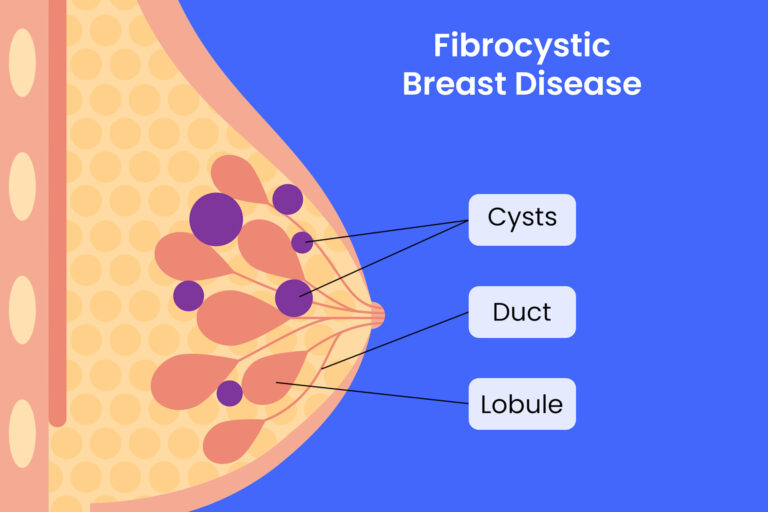
- Term used to describe breasts that can feel “lumpy/bumpy”
- breast lumps are due to fluctuating hormones with menstrual cycle
- Common normal finding in female breasts
- Sometimes associated with pain caused by hormone fluctuations
- Symptom relief options:
- Wearing a supportive bra
- Minimizing caffeine intake
- Warm / cool compress
- Vitamin E
- Evening Primose Oil
- Seek care when: Breast changes persist after your menstrual period
- A breast lump is associated with skin changes
- New nipple retraction
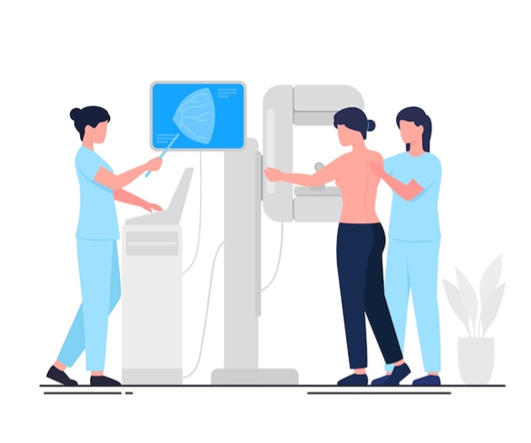
- Majority of the time, breast cancer has no presenting symptoms – no breast mass on physical exam, no external changes to the appearance of the breasts
- The American Society of Breast Surgeons recommendations
- Women over the age of 25 should undergo formal risk assessment for breast cancer
- Women with an average risk of breast cancer should initiate yearly screening mammography at the age of 40
- Women with elevated lifetime risk of developing breast cancer should undergo yearly screening and be offered yearly supplemental imaging
- This screening should be initiated at a risk-based age
- Depending on your gynecologic history, family history, and other medical history, you may be at elevated lifetime risk of developing breast cancer
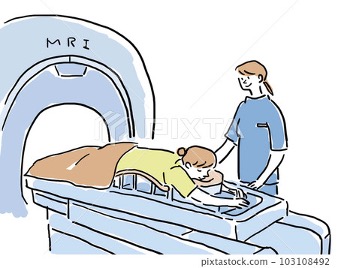
- You may qualify for high risk breast cancer screening with supplemental breast MRI in additional to yearly mammogram
- Certain breast pathologies can also put you at a higher risk of developing breast cancer:
- Atypical ductal hyperplasia (ADH)
- Atypical lobular hyperplasia (ALH)
- Lobular carcinoma in-situ (LCIS)
- You should speak with your surgeon to discuss treatment, follow-up, and risk reduction options
- There are certain genetic mutations which place patients at higher risk of developing cancer of the breast, ovary, colon, prostate.
- If you have blood-relatives with cancers, it is worthwhile to consider genetic testing as you may be eligible for risk reducing surgeries such as prophylactic removal of breasts / ovaries
- Genetic test result may change cancer screening frequency and modalities.
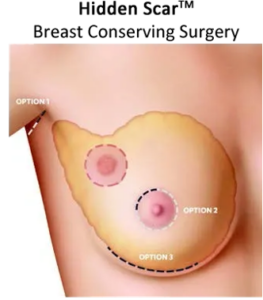
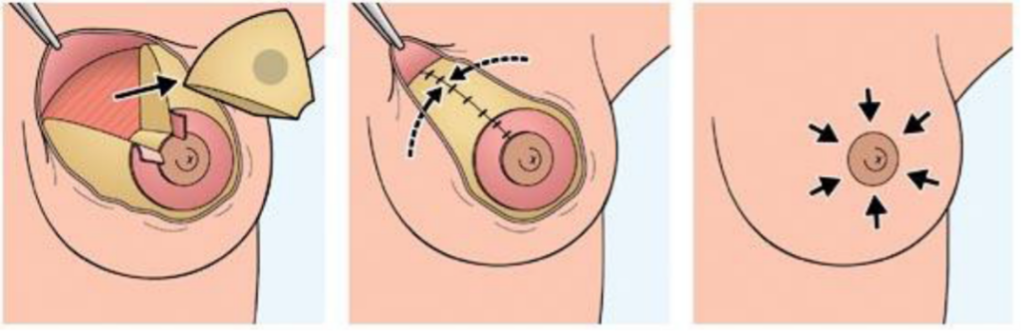
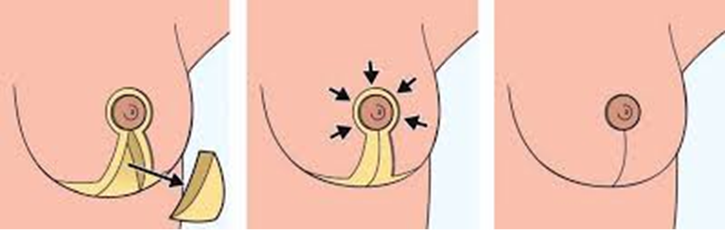
- Depending on the size of your breast, the location on the breast where surgery is needed, and the amount of breast tissue needed to be removed, the incisions can be made in areas of the breast that makes the scar less visible:
- In the folds of the armpit
- Around the edge of the areola
- In the natural crease beneath the breast
- For patients who have every considered breast lift or breast reduction, surgery can be performed with a plastic surgeon in the same setting for desired cosmetic outcome.
- There are a lot of resources online and it can easily become overwhelming
- If possible, have someone accompany you to doctor’s appointment to be an extra set of ears
- Below are some helpful links to trusted information about the diagnosis and support group
- ESMO
- ACS
- Inflammatory breast cancer network
- NCI
- Bays
- ASCO
- Cancer support community
- Lymphedema network